

Making homemade pizza starts with one simple secret: great dough. This Active Dry Yeast Pizza Dough recipe helps you create a flavorful crust that is crisp outside, soft inside, and easy to shape.
With active dry yeast, flour, warm water, olive oil, and a few basic ingredients, you can make pizza dough that tastes far better than many store-bought options. The dough rises beautifully, develops a pleasant chew, and bakes into a crispy pizza crust with delicious golden edges.
Whether you prefer a thin crust or a classic chewy base, this recipe gives you a reliable starting point. Get your oven hot, choose your favorite toppings, and enjoy a homemade pizza night.
What Is Active Dry Yeast Pizza Dough?
Active dry yeast pizza dough is a yeast-leavened dough made with flour, water, salt, yeast, and usually a little olive oil. The yeast feeds on available sugars and produces carbon dioxide during fermentation. Those tiny gas bubbles become trapped inside the developing gluten network, giving the dough its lift, elasticity, and characteristic texture.
The biggest advantage of using active dry yeast is control. You can activate the yeast in warm water before mixing, which gives you an early indication that the yeast is working. As the dough ferments, it becomes more flavorful and easier to stretch. The result can be a crisp outside with a soft, airy center rather than a dense homemade crust.
What Is Active Dry Yeast?
Active dry yeast is dried yeast that is commonly mixed with warm water before use. To activate the yeast, combine it with properly heated water and allow it to sit briefly. This process helps confirm that the yeast is active before you continue making the dough.
Ingredients for Homemade Active Dry Yeast Pizza Dough
The ingredients are simple, but each one has an important job. Bread flour provides stronger gluten and a chewy texture, while all-purpose flour creates a softer crust. Specialty pizza flour is another option for readers who want a more traditional pizza-making experience. Warm water hydrates the flour and helps the yeast begin working
| Ingredient | Purpose |
| Bread flour or all-purpose flour | Creates structure and texture |
| Active dry yeast | Helps the dough rise |
| Warm water | Activates yeast and hydrates flour |
| Olive oil | Adds tenderness and flavor |
| Salt | Improves flavor and controls fermentation |
| Sugar | Optional; supports browning |
How to Make Active Dry Yeast Pizza Dough
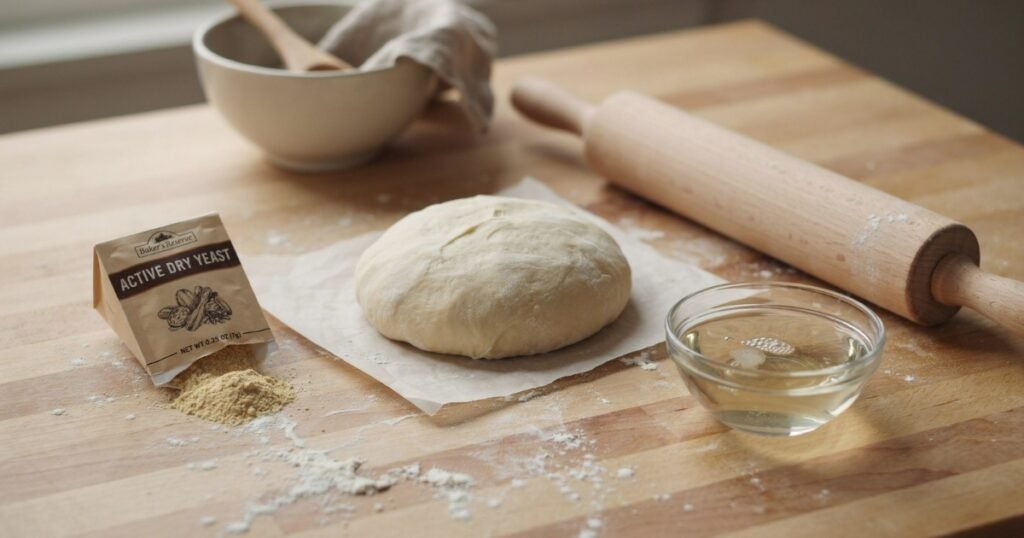
Start by combining active dry yeast with warm water and a little sugar if desired. Let the yeast mixture sit until it becomes slightly foamy. This is how you proof the yeast and check that it is active. Add flour, salt, and olive oil, then mix the dough until no dry flour remains.
How to Get the Perfect Pizza Dough Texture
Texture depends heavily on dough hydration, flour choice, kneading, and fermentation. A wetter dough can create a lighter, airier crust but may be harder to handle. A drier dough is easier to shape but can become dense.
For home pizza, aim for dough that feels soft, flexible, and slightly tacky without sticking aggressively to your hands.
Best Pizza Sauce and Toppings for Homemade Pizza
A great crust needs toppings that complement it rather than overwhelm it. A simple pizza sauce made from tomato sauce, herbs, garlic, and quality tomatoes works beautifully. San Marzano tomatoes are especially popular for their balanced flavor. Spread sauce lightly because excessive moisture can prevent the center from becoming crisp.
Instructions
Combine warm water, active dry yeast, and optional sugar. Let the mixture stand until slightly foamy. Add flour, salt, and olive oil, then mix until a rough dough forms. Knead until smooth and elastic.
Shape into a dough ball and cover.Let the dough rise at room temperature until noticeably expanded.
Divide it into two portions and let them rest. Preheat the oven to 475°F–500°F. Stretch each dough portion, add pizza sauce, shredded mozzarella, and your favorite toppings. Bake the pizza for approximately 8–15 minutes, or until the crust is golden and crisp.
| Recipe Detail | Information |
| Yield | 2 medium pizzas |
| Servings | 4 |
| prep Time | 20 minutes |
| Rise Time | 1-2 hours |
| Total Time | About 2 hours 20 minutes |
| Oven Temprature | 475°F–500°F |
| Difficulty | Easy |
Conclusion:
Making homemade pizza dough with active dry yeast is easier when you understand the basic science behind fermentation.
Fresh yeast, suitable flour, proper warm water temperature, good dough hydration, and enough resting time all contribute to better results. Once you learn how the dough should look and feel, you can confidently adjust it for your favorite crust style.
Whether you want a crispy crust, fluffy pizza dough, or a satisfying chewy base, this recipe gives you a dependable starting point. Add simple tomato sauce, melted cheese, and your favorite toppings, then bake at high heat. With a little practice, homemade pizza night can become one of the easiest and most enjoyable meals you make at home.
FAQs:
Can I use active dry yeast for pizza dough?
Yes. Active dry yeast works very well for homemade pizza dough and helps create a light, flavorful crust.
How long should pizza dough rise?
Pizza dough usually needs about 1–2 hours at room temperature, depending on the temperature of your kitchen.
Can I use instant yeast instead?
Yes. Instant yeast can generally replace active dry yeast, although it usually does not need to be activated in water first.
Why is my pizza dough not rising?
The yeast may be inactive, the water may have been too hot, or the dough may need more time in a warmer environment.
How do I make pizza dough crispy?
Use a hot oven, stretch the dough thinly, avoid excessive toppings, and bake on a thoroughly preheated pizza stone or steel.
Can I freeze pizza dough?
Yes. Wrap individual dough portions tightly and freeze them. Thaw frozen dough in the refrigerator before bringing it to room temperature.
Can I make pizza dough ahead of time?
Yes. Refrigerating pizza dough overnight can improve flavor and make homemade pizza night easier.
Can I use all-purpose flour?
Yes. All-purpose flour creates a softer crust, while bread flour generally produces a chewier pizza crust.